
Copper View uses two IPL systems: Lumecca-I on the InMode Envision platform and the Optometric Aesthetics iLight Pro. It is a quick, non-invasive treatment that does not require numbing, typically given as a series of 3 to 4 sessions. Many patients notice improvement after the first treatment.
What IPL treats, and who it may help
IPL is used for dry eye when the main problem involves the eyelids and their oil glands:
- Meibomian gland dysfunction, especially when the lid margins show inflammation and tiny abnormal blood vessels (telangiectasia)
- Ocular rosacea, which often travels with facial redness and drives lid inflammation
- Evaporative dry eye linked to poor oil layer quality
- Eyelid margin disease where inflammation keeps feeding gland blockage
IPL is not a primary treatment for aqueous-deficient dry eye, where the tear glands themselves make too little fluid. That is one reason an evaluation comes first.
IPL tends to be a good fit when meibography or gland expression shows obstructed or poorly functioning glands, the lid margins have visible redness or telangiectasia, you have facial rosacea or flushing along with dry eye, home care and drops have helped somewhat but not enough, or styes or chalazia keep coming back.
It may not be a good fit if you have a darker skin tone (pigment absorbs the light, so you may need different settings or a different treatment), a recent tan or sunburn in the treatment area, pregnancy, some photosensitizing medications or recent isotretinoin use, an active skin infection, open lesions, or suspicious pigmented spots in the area, a history of seizures triggered by light, or certain light-sensitive skin conditions.
We review your skin type, medications, and history before recommending IPL, and we will suggest another option if IPL is not right for you.
How IPL works
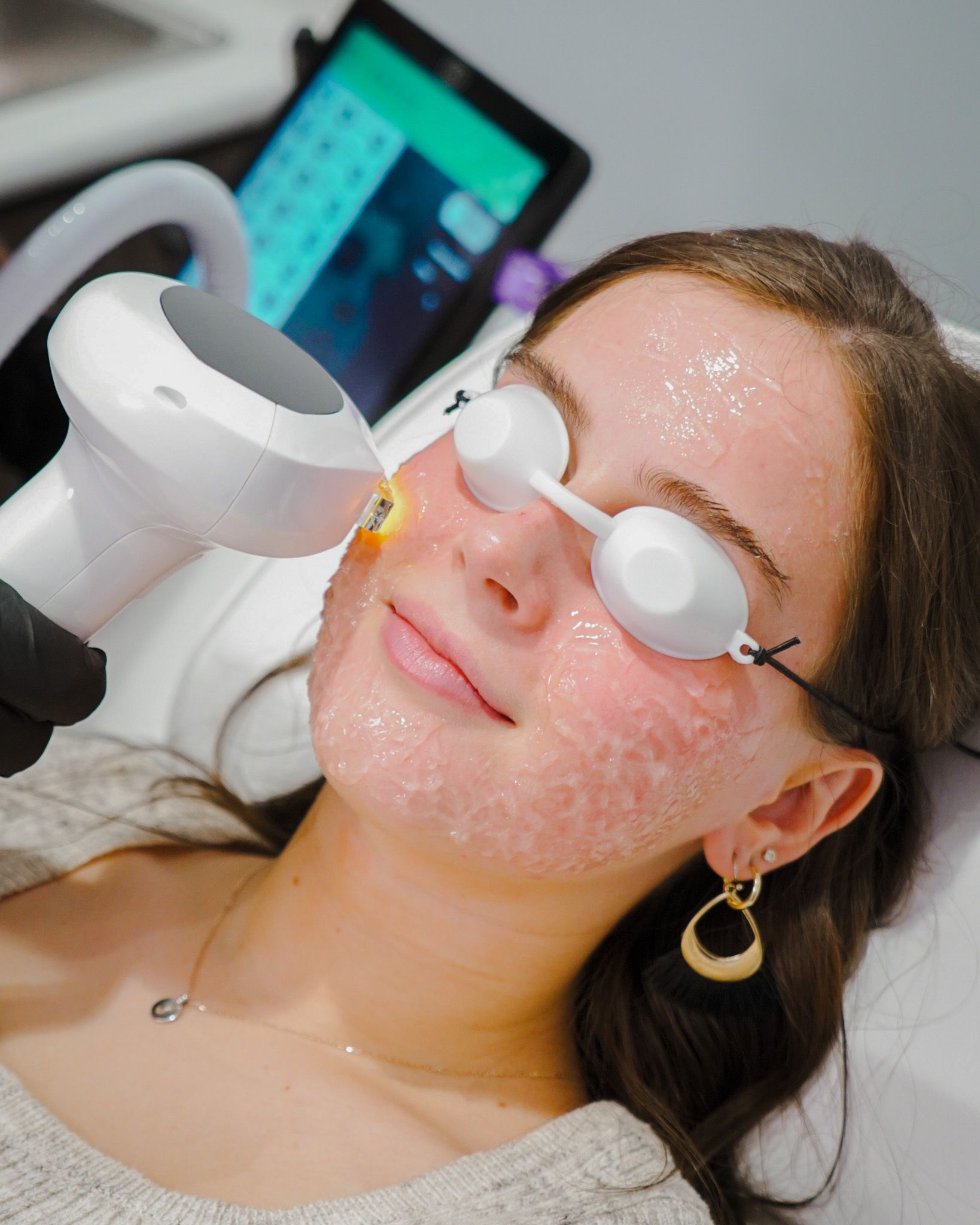
An IPL device emits bright pulses of light filtered to specific wavelengths. In dry eye care, the light is applied to the skin of the cheeks and the area below the lower lids, with the eyes fully shielded. Copper View uses two IPL systems: Lumecca-I on the InMode Envision platform, a precision applicator made for the intricate area around the eyes, and the Optometric Aesthetics iLight Pro. The videos on this page show Lumecca-I treatments around the eyes.
Researchers believe IPL helps through several pathways:
- Closing abnormal blood vessels along the lids that release inflammatory signals into the glands
- Lowering inflammation in the lids and on the surface
- Warming the tissue, which can help soften thickened gland oil
- Reducing Demodex mites and bacteria on the lids, which may contribute to blepharitis
A randomized, placebo-controlled trial found that IPL improved tear film stability and symptoms in people with MGD compared with a sham treatment, with benefits building across sessions. The exact mechanisms are still being studied.
What to expect
A typical starting series is 3 to 4 sessions spaced a few weeks apart. Many patients notice improvement after the first treatment. Results vary, and IPL is not a cure for MGD.
- Preparation. Makeup is removed and protective eye shields are placed.
- Gel and pulses. A cool gel goes on the skin, and the light is applied in a series of quick pulses across the cheeks and lower lid area. Each pulse feels like a warm snap. The treatment is quick and non-invasive, and numbing is not required.
- Gland expression. Often the meibomian glands are gently expressed right after, while the oil is warm.
- Afterward. Skin may look slightly pink for a few hours. Most people return to normal activities right away. Sun protection matters for the next couple of weeks.
Some people later benefit from maintenance sessions every several months. IPL is usually paired with home care and sometimes prescriptions.
How IPL fits with other care
IPL is rarely the only thing we do. It is commonly paired with gland expression at the same visit, radiofrequency when deeper heating of thick oil would help, low-level light therapy as a gentle adjunct, prescription drops for surface inflammation, and lid hygiene and heat at home.
Copper View also offers IPL as a cosmetic photofacial. They use the same broad technology family, but the goal, settings, treatment area, and follow-up are different.
| Dry eye IPL | IPL photofacial | |
|---|---|---|
| Goal | Improve meibomian gland function and lid inflammation | Reduce sun spots, redness, and uneven tone |
| Treatment area | Cheeks and below the lower lids, eyes shielded | Face, neck, back of the hands, or other sun-exposed skin |
| Planned by | Optometrist after a dry eye evaluation | Aesthetic consultation |
| Usually paired with | Gland expression, dry eye home care | Skincare and sun protection |
IPL can help the right patient and do little for the wrong one. If your dry eye is mostly aqueous-deficient, driven by medication, or tied to an incomplete blink, other treatments may matter more. A dry eye evaluation tells us whether IPL belongs in your plan at all.
Frequently asked questions
Does IPL for dry eye hurt?
Numbing is not required. Most patients describe each pulse as a quick warm snap, similar to a rubber band. Protective shields cover the eyes, and a cooling gel is used on the skin. Gland expression afterward can feel like firm pressure on the lids.
How many IPL sessions will I need?
A typical starting series is 3 to 4 sessions spaced a few weeks apart. Some patients benefit from periodic maintenance sessions afterward. We decide based on how your symptoms and gland findings respond.
Is dry eye IPL the same as an IPL photofacial?
They use the same broad technology family, but the goal, settings, treatment area, and follow-up are different. Dry eye IPL is a medical treatment aimed at the eyelids and meibomian glands. A photofacial is a cosmetic treatment for sun spots, redness, and skin tone. Copper View offers both, and we can explain the differences for your situation. See IPL photofacial.
Who should not have IPL?
IPL may not be appropriate for people with darker skin types without special settings or caution, a recent tan, active skin infections or lesions in the area, pregnancy, certain photosensitizing medications, or a history of skin conditions triggered by light. We review your history and skin type before recommending it.
Is IPL for dry eye covered by insurance?
IPL for dry eye is usually not covered by medical or vision insurance and is paid out of pocket. HSA or FSA funds may be usable depending on your plan. We will discuss cost before you start.
When will I notice a difference?
Many patients notice improvement after the first treatment. Comfort often continues to build across the series, and we still look at the full course when we judge results. Results vary from person to person.
Sources and further reading
- Xue AL, et al. Randomised double-masked placebo-controlled trial of the cumulative treatment efficacy profile of intense pulsed light therapy for meibomian gland dysfunction. The Ocular Surface. 2020;18(2):286-297.
- Toyos R, McGill W, Briscoe D. Intense pulsed light treatment for dry eye disease due to meibomian gland dysfunction; a 3-year retrospective study. Photomedicine and Laser Surgery. 2015;33(1):41-46.
- Jones L, et al. TFOS DEWS II Management and Therapy Report. The Ocular Surface. 2017;15(3):575-628.
- Perez VL, et al. TFOS DEWS III: Executive Summary. American Journal of Ophthalmology. 2026;282:135-145.
- Nichols KK, et al. The International Workshop on Meibomian Gland Dysfunction: Executive Summary. Investigative Ophthalmology & Visual Science. 2011;52(4):1922-1929.