
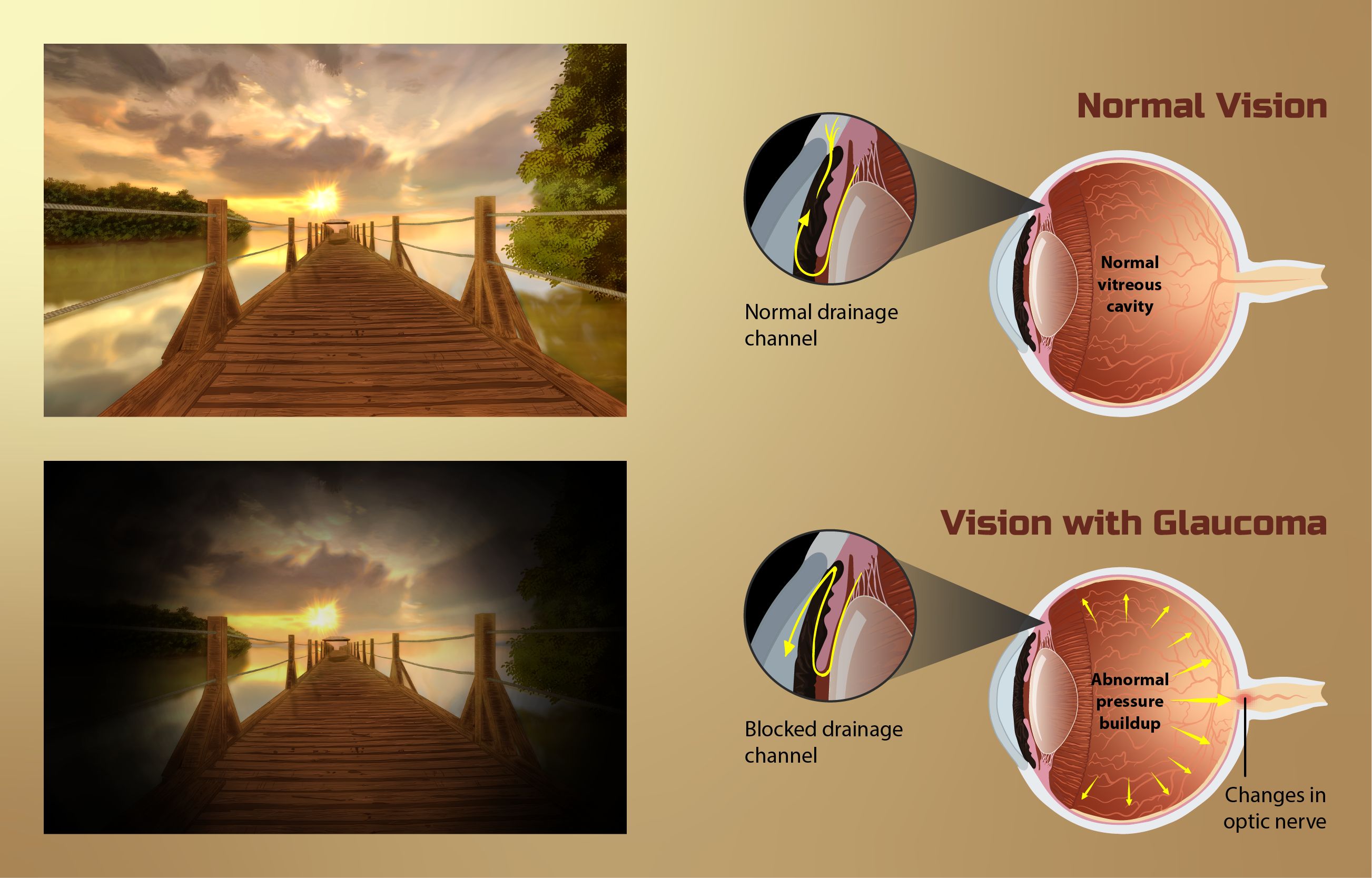
Glaucoma is a group of eye diseases that damage the optic nerve, often without early symptoms. Copper View Eye Care + Aesthetics in South Jordan screens for glaucoma during eye exams with iCare rebound tonometry, which has no air puff, and retinal imaging, and diagnoses and monitors glaucoma over time, coordinating with ophthalmologists when surgery or advanced treatment is needed.

Types of glaucoma
- Primary open-angle glaucoma, the most common form, develops gradually and painlessly
- Angle-closure glaucoma can develop suddenly and is an emergency when it does. Symptoms include severe eye pain, headache, nausea, blurred vision, and halos
How we check for glaucoma
- Eye pressure measurement with iCare rebound tonometry
- Optic nerve evaluation
- Widefield retinal imaging with the ZEISS CLARUS 500
- Additional testing as needed, with referral when appropriate
Living with glaucoma
Glaucoma is usually managed with eye drops, laser, or surgery. Ongoing monitoring tracks pressure and the optic nerve over time. Glaucoma drops can also affect the eye’s surface, so patients on long-term drops sometimes develop dry eye, which we can help with too.
Frequently asked questions
Can glaucoma be cured?
Glaucoma damage can't be reversed, but treatment can usually slow or stop further loss. That's why early detection matters.
Who is at higher risk for glaucoma?
People over 60, people with a family history of glaucoma, Black and Hispanic adults, people with high eye pressure, and people with diabetes or high nearsightedness are at higher risk.
Is the glaucoma test the air puff?
We use an iCare rebound tonometer, which measures eye pressure with a gentle tap rather than an air puff.