
Copper View Eye Care + Aesthetics in South Jordan uses Forma-I, a bipolar radiofrequency (RF) treatment, for meibomian gland dysfunction. Gentle RF heat to the eyelids helps improve circulation and function of the meibomian glands and can melt thickened oil so it can flow onto the tear film. As a modest cosmetic bonus, the same heat may also support collagen in the treatment area. It is usually done as a short series of comfortable sessions, often combined with gland expression and home care, after a dry eye evaluation confirms MGD.
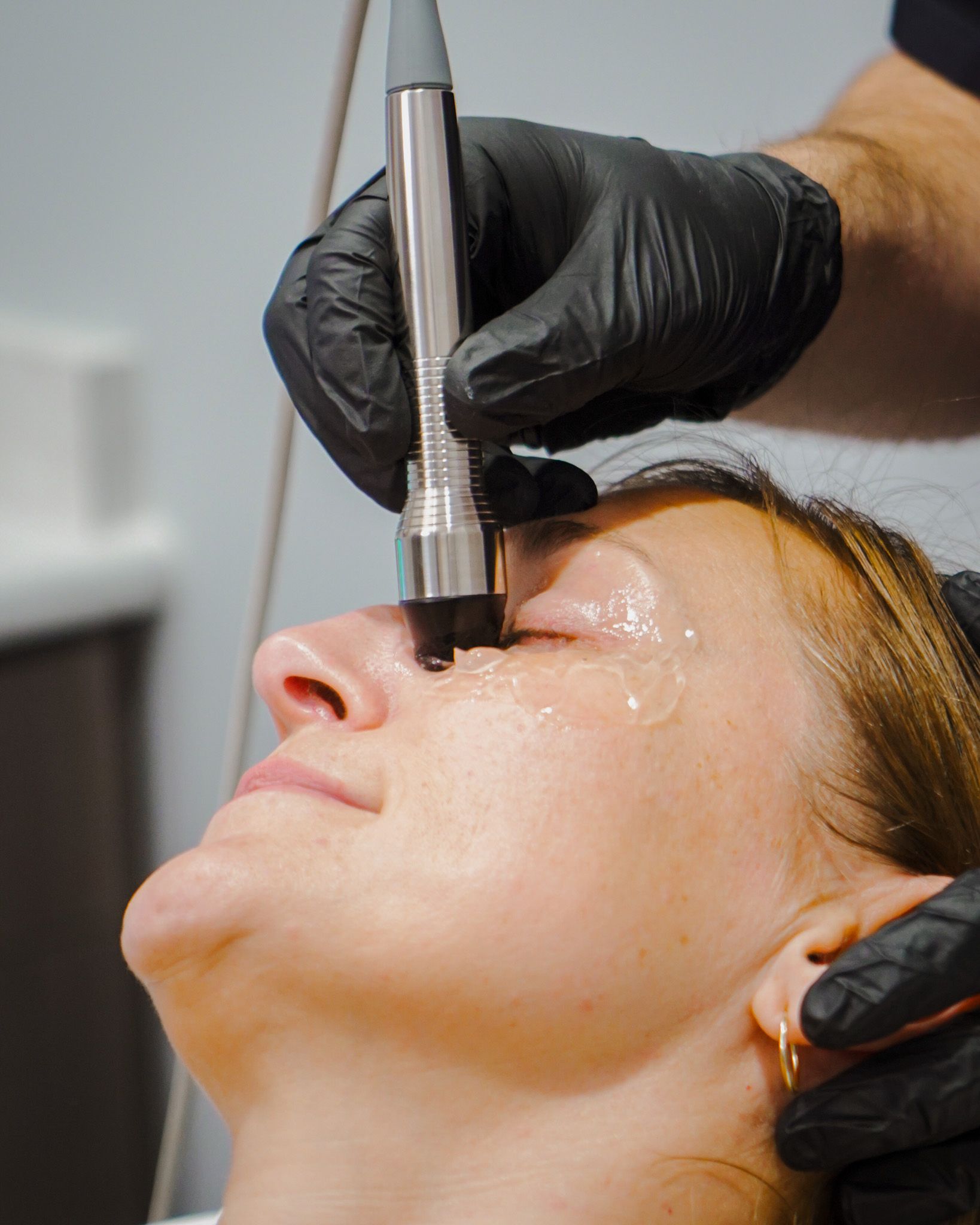
How Forma-I radiofrequency helps the meibomian glands
The meibomian glands produce the oil that keeps tears from evaporating. In meibomian gland dysfunction, that oil thickens and the gland openings can clog, so the tear film evaporates too quickly. Heat helps thickened oil melt and flow.
Warm compresses at home often don’t get the glands warm enough for long enough. Forma-I, a bipolar radiofrequency (RF) treatment, delivers gentle, controlled heat into the eyelid tissue, and gland expression afterward can clear softened oil.
A modest cosmetic bonus
The same gentle heat may also support collagen and elastin in the treatment area, which can help the look of fine lines or laxity. That is a side benefit of dry eye treatment, not the main goal. If your main interest is skin tightening, see Forma radiofrequency skin tightening.
Who may benefit
- Evaporative dry eye from meibomian gland dysfunction
- Patients whose symptoms persist despite warm compresses and lid hygiene
- Some patients who are not ideal IPL candidates, for example because of skin type
Forma-I radiofrequency is not a fit for everyone. People with certain implanted electronic devices, active eyelid infection, or other conditions may need a different approach. We review your history first.
What to expect
- Evaluation first. We confirm MGD with gland evaluation and meibography.
- Treatment. A Forma-I handpiece is moved over the eyelid and surrounding area while temperature is monitored. Sessions are brief.
- Gland expression. Often performed afterward to clear softened oil.
- Series and maintenance. Several sessions, then periodic maintenance depending on response.
How RF fits with other treatments
Forma-I radiofrequency is usually one part of a plan that also includes lid hygiene, blink habits, and sometimes prescription drops to manage inflammation. When lid-margin vessels or rosacea are involved, IPL may be added. For glands that are blocked deep in the lid, meibomian gland probing may be considered.
Realistic expectations
Some patients notice changes within a few sessions, while others improve gradually. MGD is usually chronic, so maintenance matters. Gland structures that have already been lost are unlikely to fully return, which is one reason earlier treatment can help.
Frequently asked questions
Does Forma-I radiofrequency for dry eye hurt?
Most patients describe it as a warm, relaxing sensation. The device monitors temperature to keep the treatment comfortable.
How many sessions will I need?
A series of several sessions spaced a few weeks apart is common, followed by maintenance as needed. Your plan depends on your gland findings.
Is RF better than IPL?
Neither is better for everyone. IPL is especially helpful when lid-margin blood vessels and rosacea are part of the picture. Forma-I radiofrequency focuses on heating the glands and can be used on a wider range of skin tones. Some patients benefit from both. See IPL vs. radiofrequency.
Is RF for dry eye covered by insurance?
In-office Forma-I radiofrequency treatment for dry eye is generally self-pay. We will give you a cost estimate before starting.
Sources and further reading
- Nichols KK, et al. The International Workshop on Meibomian Gland Dysfunction: Executive Summary. Investigative Ophthalmology & Visual Science. 2011;52(4):1922-1929.
- Perez VL, et al. TFOS DEWS III: Executive Summary. American Journal of Ophthalmology. 2026;282:135-145.
- Jones L, et al. TFOS DEWS II Management and Therapy Report. The Ocular Surface. 2017;15(3):575-628.