
Keratoconus is a condition in which the cornea thins and bulges into a cone shape, causing blurred and distorted vision that glasses often can't fully correct. Copper View Eye Care + Aesthetics in South Jordan monitors keratoconus with corneal topography and fits scleral and other specialty lenses for clearer vision. Patients whose keratoconus is progressing are referred for corneal cross-linking.
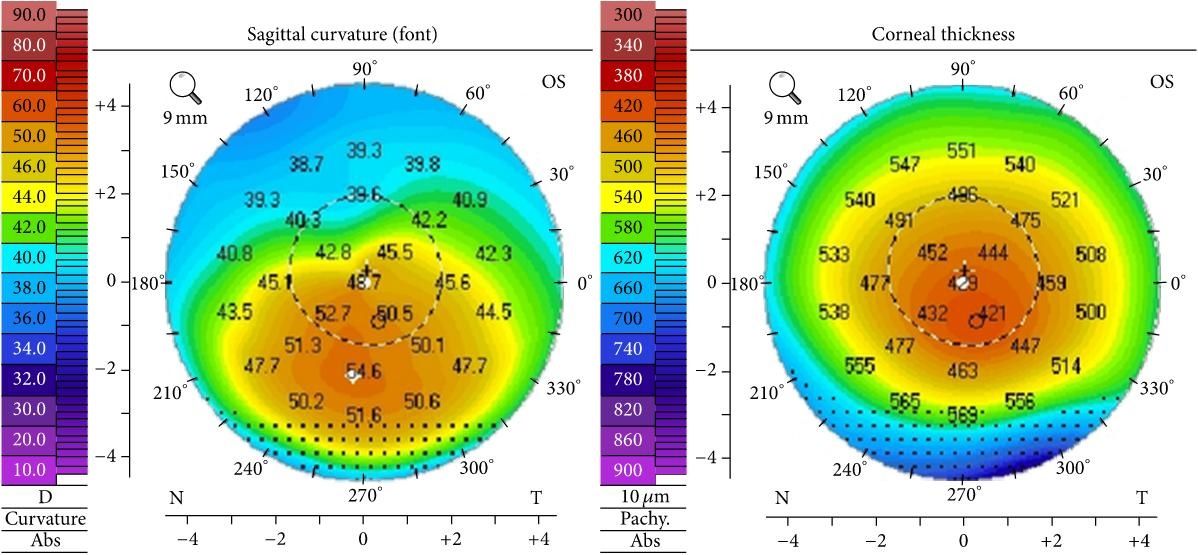

Signs of keratoconus
- Blurry or distorted vision
- Frequent prescription changes, especially increasing astigmatism
- Glare, halos, and ghosting around lights
- Light sensitivity
Keratoconus often begins in the teens or twenties.
Lens options
- Scleral lenses, often the most comfortable option for moderate to advanced keratoconus
- Rigid gas permeable lenses for some milder cases
- Specialty soft lenses in select cases
Monitoring and cross-linking
We track corneal shape over time with topography. If the cornea is changing, we refer you to a corneal specialist for cross-linking, a procedure that strengthens the cornea and can slow or halt progression.
Frequently asked questions
Can keratoconus be cured?
There's no cure, but corneal cross-linking can slow or stop progression, and specialty lenses can provide clear vision.
Why can't glasses correct keratoconus?
Glasses can't fully correct the irregular shape of the cornea. Rigid and scleral lenses create a new smooth optical surface in front of it.
Should I stop rubbing my eyes?
Yes. Eye rubbing is associated with keratoconus progression. If allergies make your eyes itch, let us know so we can help.
Sources and further reading
- American Academy of Ophthalmology. What Is Keratoconus?
- Gomes JAP, et al. Global Consensus on Keratoconus and Ectatic Diseases. Cornea. 2015;34(4):359-369.
- Bae SS, et al. Outcomes of scleral lenses for dry eye disease in chronic ocular graft-versus-host disease. Contact Lens and Anterior Eye. 2023;46(1):101721.