
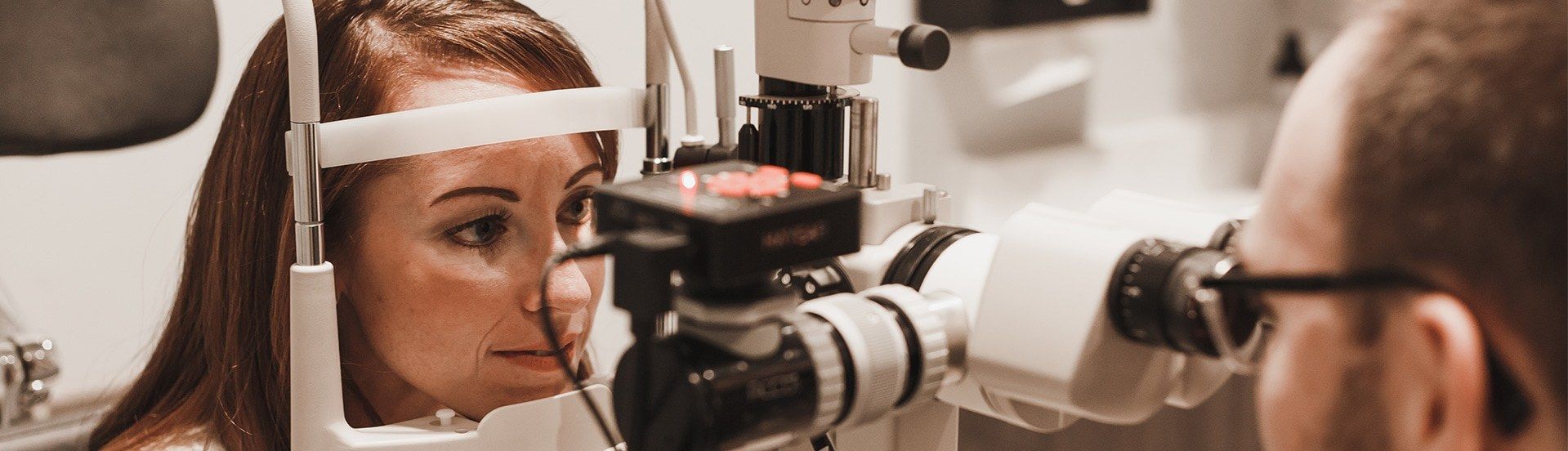
Copper View Eye Care + Aesthetics in South Jordan evaluates and treats dry eye disease, including meibomian gland dysfunction. Dr. Jeff Simmons has a special clinical interest in dry eye and ocular surface disease. Depending on what testing shows, treatment may include IPL, radiofrequency, low-level light therapy, prescription medications, punctal plugs, autologous serum tears, amniotic membranes, meibomian gland probing, and scleral lenses.
What dry eye is
Dry eye disease is a long-term condition of the tear film and the surface of the eye. Many patients have plenty of tears. Their tears simply do not stay on the eye long enough, or they are the wrong mix of water, mucus, and oil. That is why dry eye can feel stubborn, and why the right treatment depends on the cause.
Common symptoms include burning, stinging, or grittiness, watery eyes, vision that blurs and clears with blinking, and contact lenses that become uncomfortable after a few hours. More detail is on our pages about dry eye symptoms and why dry eyes often water.
Causes: it is rarely just "not enough tears"
The international TFOS DEWS reports describe dry eye as a loss of tear film balance, with instability, increased tear saltiness (osmolarity), inflammation, and surface damage feeding each other in a cycle. Soothing one part rarely breaks the loop.
Two broad mechanisms drive most dry eye, and many people have both.
| Evaporative dry eye | Aqueous-deficient dry eye | |
|---|---|---|
| What goes wrong | The oily outer layer of the tears is thin or poor quality, so tears evaporate too fast | The lacrimal glands make too little watery tear fluid |
| Most common cause | Meibomian gland dysfunction | Aging, autoimmune conditions such as Sjogren's disease, some medications |
| Clues on exam | Fast tear breakup, cloudy or thick gland oil, gland dropout on meibography | Low tear meniscus, staining of the surface, reduced tear volume |
| Treatment direction | Restore gland function and the oil layer | Conserve and supplement tears, calm inflammation |
On top of those mechanisms, a long list of everyday factors can push the eye toward dryness:
- Meibomian gland dysfunction. Blocked or thickened oil glands in the eyelids are among the most common causes. Read about MGD.
- Inflammation. Ocular surface inflammation is both a cause and a result of dry eye. How inflammation fits in.
- Blinking. Screen work can cut blink rate dramatically, and partial blinks do not spread oil well.
- Environment. Utah's low humidity, elevation, wind, winter heating, and summer air conditioning all speed tear evaporation. Why dry eye is so common in Utah.
- Medications. Antihistamines, some antidepressants, acne medications such as isotretinoin, and others can reduce tears or affect the glands.
- Contact lenses. Lenses split the tear film and can worsen an existing gland problem. Contacts and dry eye.
- Cosmetics and periocular factors. Eyeliner on the lid margin, some cosmetics, and skincare migrating into the eyes can all irritate the surface. Makeup, skincare, and dry eye.
- Health and hormones. Rosacea, thyroid disease, autoimmune conditions, menopause, and prior eye surgery are all associated with dry eye.
What happens at a dry eye evaluation
We first try to understand why your eyes are dry, then recommend the treatment or combination of treatments that makes sense. Technology supports that process. It isn't the process.
That matters because different causes respond to different solutions. A heat-based gland treatment does little for tears that the lacrimal gland isn't producing. A plug that keeps more tears on the eye can make an inflamed eye feel worse if the inflammation isn't addressed first.
A dry eye evaluation is a dedicated visit, longer and more detailed than the quick dryness check inside a routine eye exam. Depending on your symptoms and examination findings, your evaluation may include:
- Symptom questionnaires. OSDI and SPEED scores give a baseline and let us measure whether treatment is working.
- Tear breakup time. How quickly the tear film becomes unstable after a blink. A fast breakup often points to an oil layer problem.
- Tear meniscus evaluation. The height of the tear lake along the lower lid helps estimate tear volume.
- Blink evaluation. Incomplete or infrequent blinking starves the eye of fresh oil and is common with screen work.
- Meibomian gland evaluation and expression. Gentle pressure on the lids shows whether the glands release clear oil, cloudy oil, paste, or nothing.
- Meibography. Infrared images of the glands inside the eyelids show shortening, distortion, or dropout.
- MMP-9 inflammation testing. A point-of-care test for an inflammatory marker in the tears, used when it would change treatment.
- Ocular surface staining. Diagnostic dyes reveal dry or damaged spots on the cornea and conjunctiva.
We also review your medications, health history, screen habits, contact lenses, cosmetics, and what you have already tried. Not every patient needs every test. At the end, Dr. Simmons explains what he found, which type or types of dry eye are most likely involved, and a plan in plain language. More about the dry eye evaluation and meibography.
Before your visit
If you can, skip eye drops for about two hours beforehand and come without eye makeup. Bring a list of your medications and the drops or treatments you have tried, including what helped and what didn't.
How we approach treatment, and what to expect
Treatment usually builds in layers. Most plans start with targeted home care and, when needed, a prescription. In-office treatments are added when glands, lids, or inflammation need more than home care can deliver. The most advanced options are reserved for severe surface disease.
Foundation
Lid hygiene, warm compresses done correctly, hypochlorous acid lid sprays, blink exercises, preservative-free lubricants, screen and environment changes, and a review of medications and cosmetics.
Prescription therapy
Anti-inflammatory and other prescription drops, short steroid courses, treatment for Demodex blepharitis, and oral medications when appropriate.
In-office gland and lid treatment
IPL, radiofrequency, low-level light therapy, meibomian gland expression, and gland probing for obstructed glands.
Advanced surface protection
Punctal plugs, autologous serum tears, amniotic membranes, and scleral lenses for persistent or severe disease.
Dry eye care works best when you know what to expect up front:
- It is usually managed, not cured. Most dry eye is chronic. The aim is comfortable, stable eyes with a routine you can live with.
- Improvement takes weeks to months. Anti-inflammatory drops and gland treatments work gradually. We recheck and adjust.
- Glands that are gone may not come back. Treatment can improve how remaining glands work. That is one reason earlier care tends to go better.
- Some treatments are out of pocket. We'll explain which parts of a plan are typically billed to insurance and which are not before you commit.
- Your part matters. Home care, consistent use of prescriptions, and follow-up visits make a measurable difference.