
Copper View Eye Care + Aesthetics fits specialty contact lenses in South Jordan, Utah, including scleral lenses, lenses for keratoconus and irregular corneas, and orthokeratology. Fittings use corneal topography to map the eye's shape. Specialty lenses can help people who see poorly or feel uncomfortable in regular contacts, including some patients with severe dry eye.

Lenses for eyes that need something different
Standard soft lenses work beautifully for most people. Specialty lenses are for the eyes where they don’t: corneas that are irregular, prescriptions that soft lenses can’t correct well, surfaces too dry or damaged for ordinary lenses, and kids whose nearsightedness is progressing.
Dr. Simmons received the GPLI Contact Lens Clinical Excellence Award during his training, and specialty lenses remain a core part of the practice.
Specialty lenses we fit
Scleral lenses
Large rigid lenses that vault over the cornea and rest on the white of the eye, holding a fluid reservoir against the surface.
Keratoconus lenses
Sclerals and other designs that mask a cone-shaped cornea for sharper vision.
Orthokeratology
Overnight lenses that gently reshape the cornea for clear daytime vision without glasses or contacts.
Myopia management
Strategies to help slow nearsightedness progression in children.
Who may benefit
- Keratoconus, pellucid marginal degeneration, or other corneal ectasia
- Irregular corneas after refractive surgery, injury, or corneal transplant
- High astigmatism or prescriptions that soft lenses can’t correct sharply
- Severe dry eye or ocular surface disease, including some cases of Sjogren’s disease or graft-versus-host disease
- Kids and adults interested in orthokeratology
- Anyone who has been told they “can’t wear contacts”
How a fitting works
- Evaluation. We review your history, measure vision, and check the health of the cornea and ocular surface.
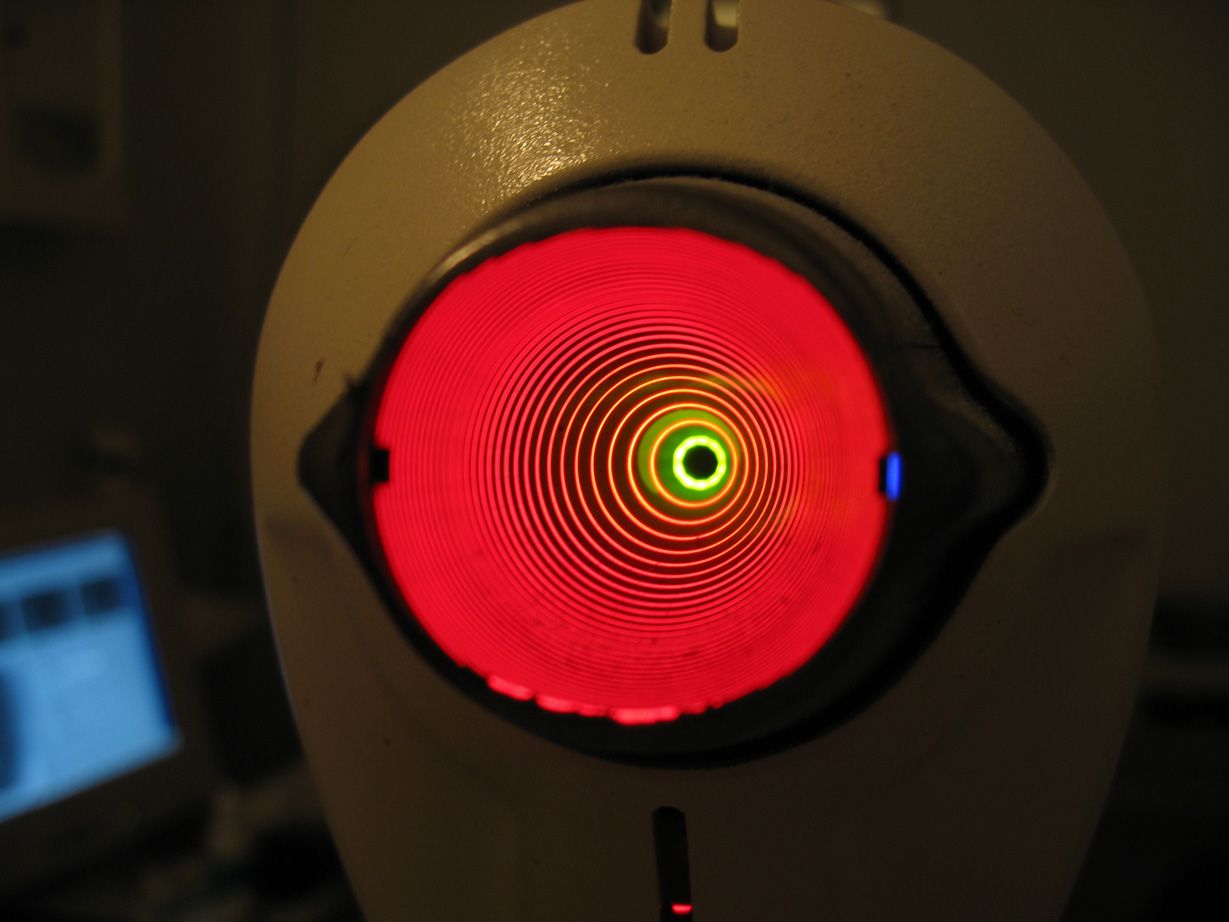
- Corneal topography. A map of the cornea’s shape guides lens design.
- Diagnostic lenses. We try lenses on the eye and evaluate fit, vision, and comfort.
- Custom order. Your lenses are made to your measurements.
- Dispensing and training. We teach insertion, removal, and care, and check the fit.
- Follow-up. Most specialty fits are refined over a few visits.
The dry eye connection
Contact lens problems and dry eye are closely linked. Sometimes treating meibomian gland dysfunction makes regular lenses comfortable again. For severe ocular surface disease, a scleral lens can serve as a treatment in its own right, keeping the cornea bathed in fluid all day. See scleral lenses for dry eye.
Cost and coverage
Specialty lens fittings involve more time and custom lenses, so fees are higher than standard contact lens exams. Some medical and vision plans offer coverage for medically necessary contact lenses, such as for keratoconus. We’ll help verify benefits and give you an estimate before ordering.
Frequently asked questions
Who needs specialty contact lenses?
People with keratoconus or other irregular corneas, high or unusual prescriptions, corneal scarring, eyes that have had surgery, severe dry eye or ocular surface disease, and children or adults interested in orthokeratology. People who have given up on regular contacts are often good candidates too.
How is a specialty lens fitting different?
It takes more time and usually more than one visit. We map the cornea with topography, evaluate the ocular surface, try diagnostic lenses, and refine the design. Custom lenses are ordered and then checked on the eye.
Does insurance cover specialty contact lenses?
Some plans cover specialty lenses when they are medically necessary, such as for keratoconus. Coverage varies widely, so we help verify benefits before ordering.
Are specialty lenses uncomfortable?
Many patients are surprised by how comfortable they are once fitted. Scleral lenses rest on the white of the eye and avoid the sensitive cornea, and orthokeratology lenses are worn only during sleep.
Sources and further reading
- American Academy of Ophthalmology. What Is Keratoconus?
- Gomes JAP, et al. Global Consensus on Keratoconus and Ectatic Diseases. Cornea. 2015;34(4):359-369.
- Cho P, Cheung SW. Retardation of Myopia in Orthokeratology (ROMIO) Study: a 2-year randomized clinical trial. IOVS. 2012;53(11):7077-7085.
- Jones L, et al. TFOS Lifestyle: Impact of contact lenses on the ocular surface. The Ocular Surface. 2023;29:175-219.